
Tempered & Heat-Strengthened Glass
Strength That Endures, Safety That Protects
Tempered Glass vs Heat-Strengthened Glass
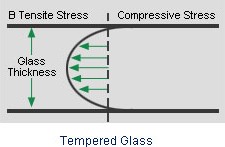
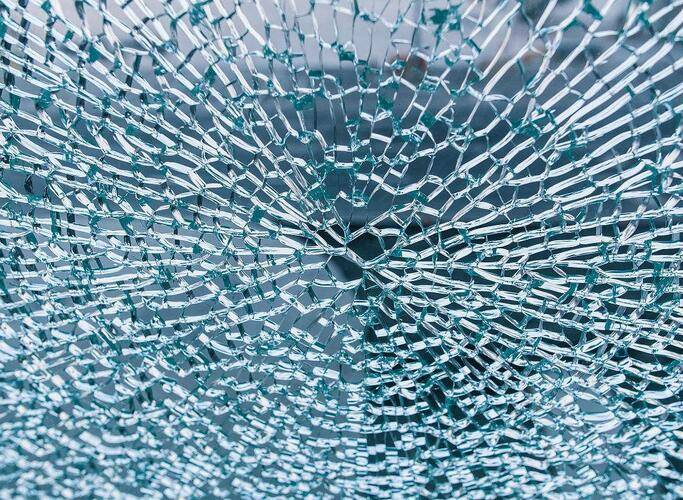
Tempered Glass is produced by heating the glass to a temperature range of 620°C to 700°C, followed by rapid cooling using jets of cold air. This process creates compressive stress on the surface, making the glass up to 4-5 times stronger than untreated glass. In the event of breakage, tempered glass shatters into small, blunt pieces, minimising the risk of injury. It is commonly used in applications requiring enhanced strength and safety.
Heat-Strengthened Glass, also known as Half Tempered Glass, is heated to a lower temperature range of 600°C to 620°C and subjected to a slower cooling process. As a result, it is approximately twice as strong as untreated glass but not as strong as tempered glass. While it provides increased strength is needed but safety glazing is not a requirement.
Tempered Glass is produced by heating the glass to a temperature range of 620°C to 700°C, followed by rapid cooling using jets of cold air. This process creates compressive stress on the surface, making the glass up to 4-5 times stronger than untreated glass. In the event of breakage, tempered glass shatters into small, blunt pieces, minimising the risk of injury. It is commonly used in applications requiring enhanced strength and safety.
Heat-Strengthened Glass, also known as Half Tempered Glass, is heated to a lower temperature range of 600°C to 620°C and subjected to a slower cooling process. As a result, it is approximately twice as strong as untreated glass but not as strong as tempered glass. While it provides increased strength is needed but safety glazing is not a requirement.
Tempered Glass is produced by heating the glass to a temperature range of 620°C to 700°C, followed by rapid cooling using jets of cold air. This process creates compressive stress on the surface, making the glass up to 4-5 times stronger than untreated glass. In the event of breakage, tempered glass shatters into small, blunt pieces, minimising the risk of injury. It is commonly used in applications requiring enhanced strength and safety.
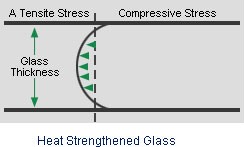
Heat-Strengthened Glass, also known as Half Tempered Glass, is heated to a lower temperature range of 600°C to 620°C and subjected to a slower cooling process. As a result, it is approximately twice as strong as untreated glass but not as strong as tempered glass. While it provides increased strength is needed but safety glazing is not a requirement.
Reports & Certifications
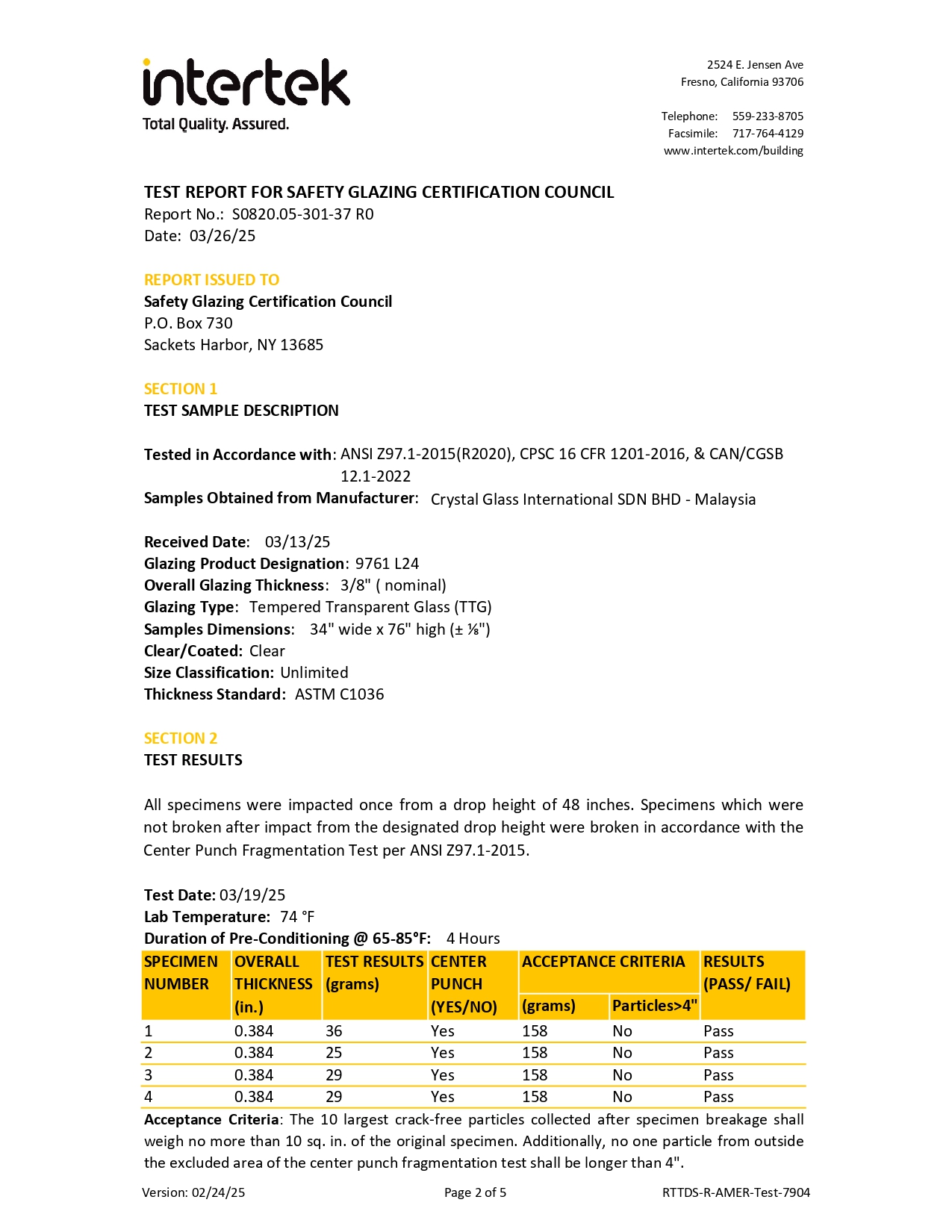
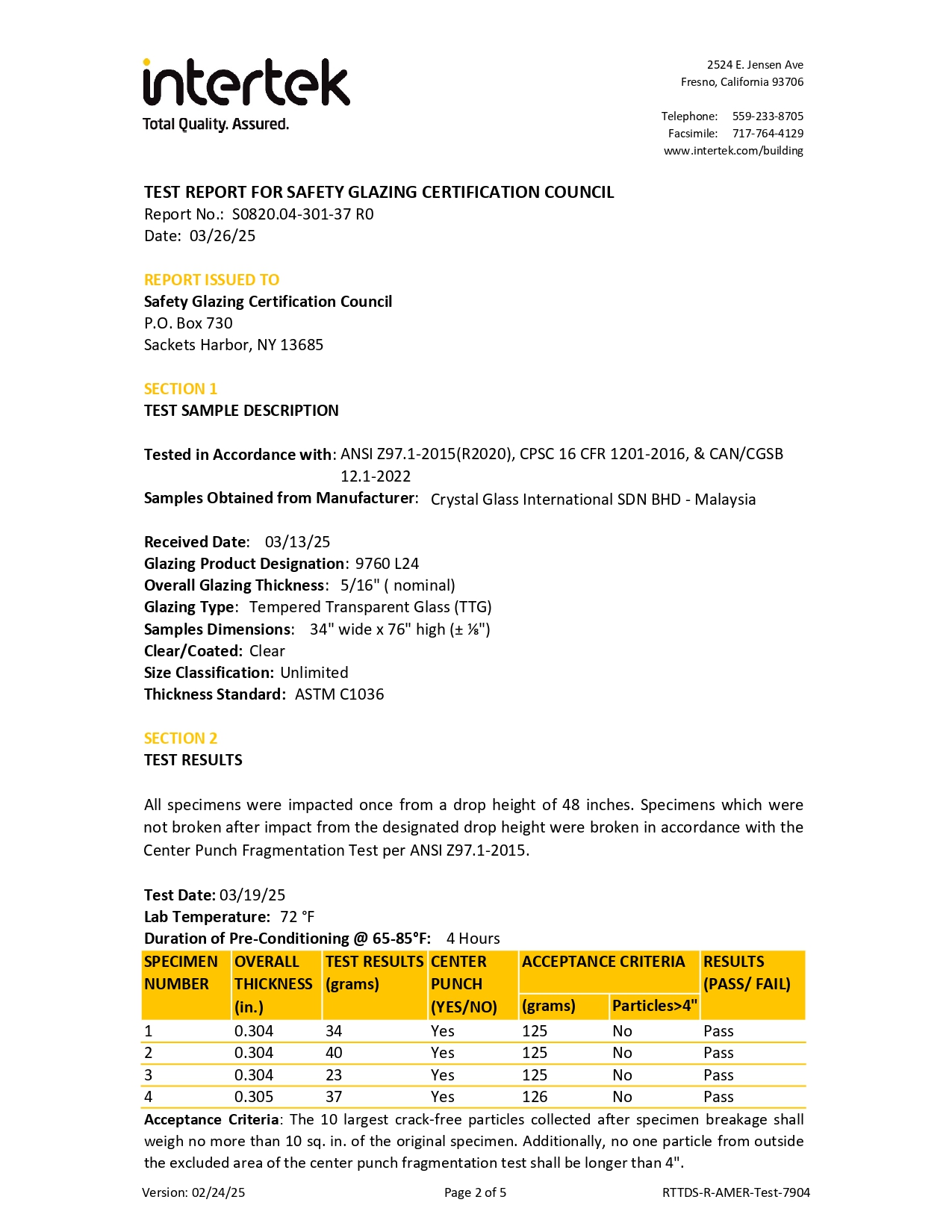
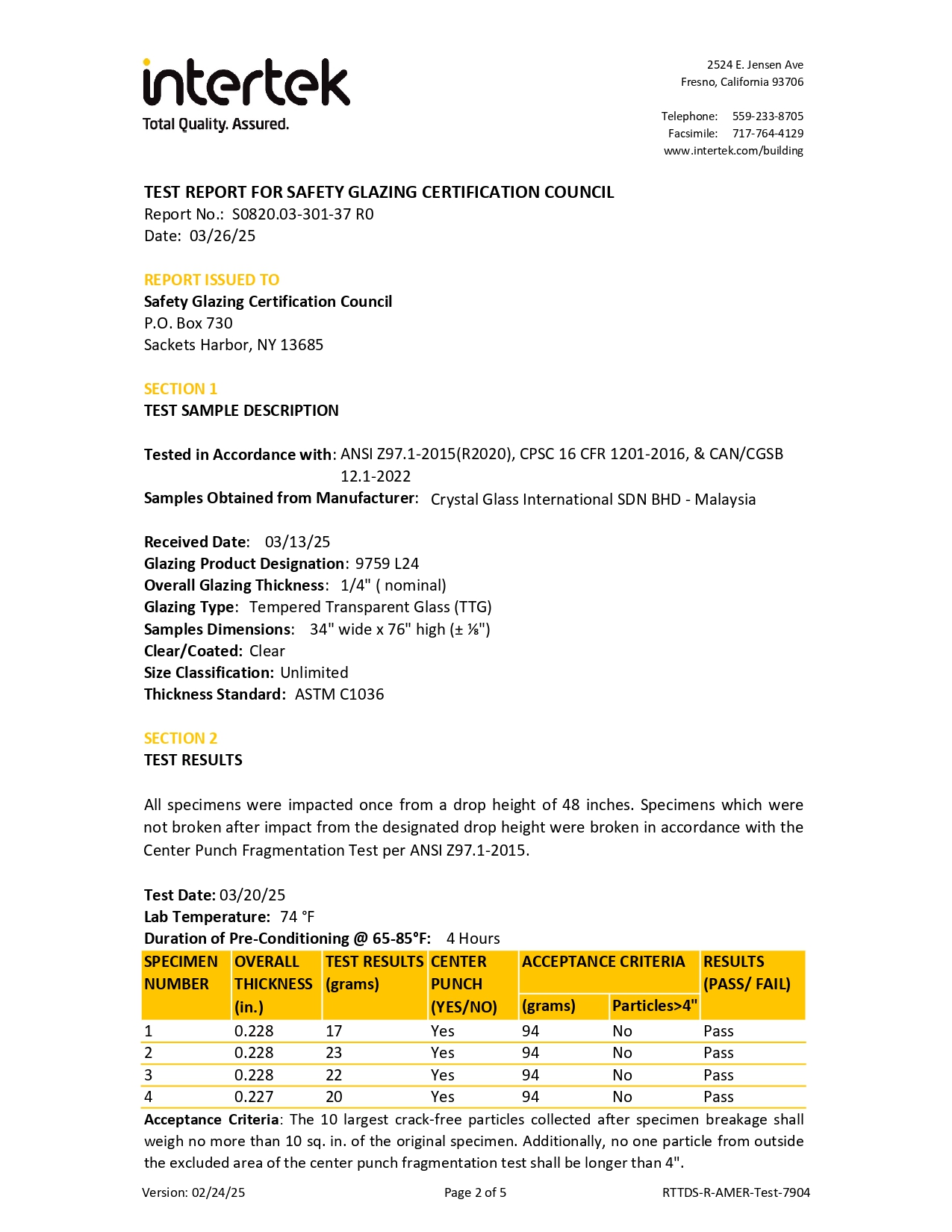
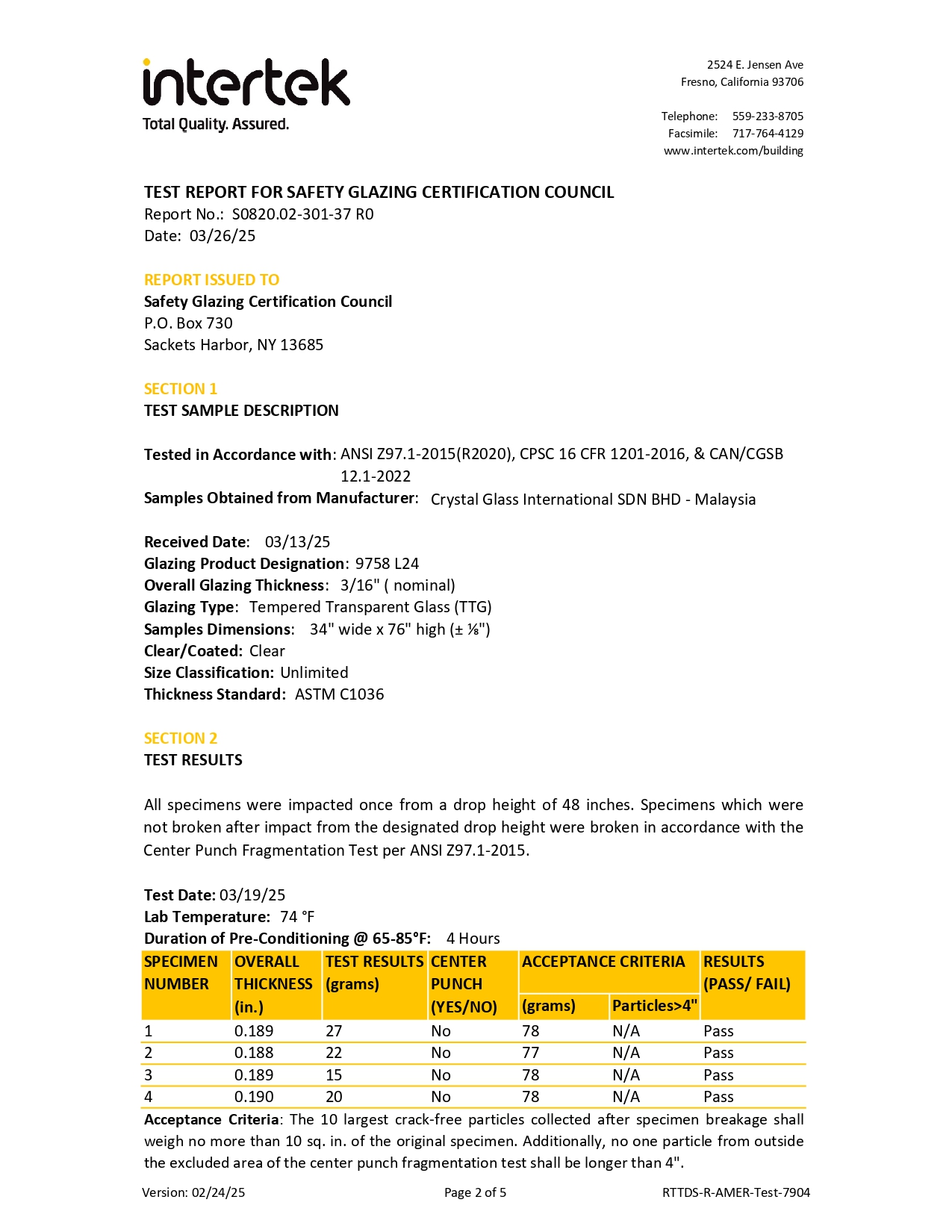
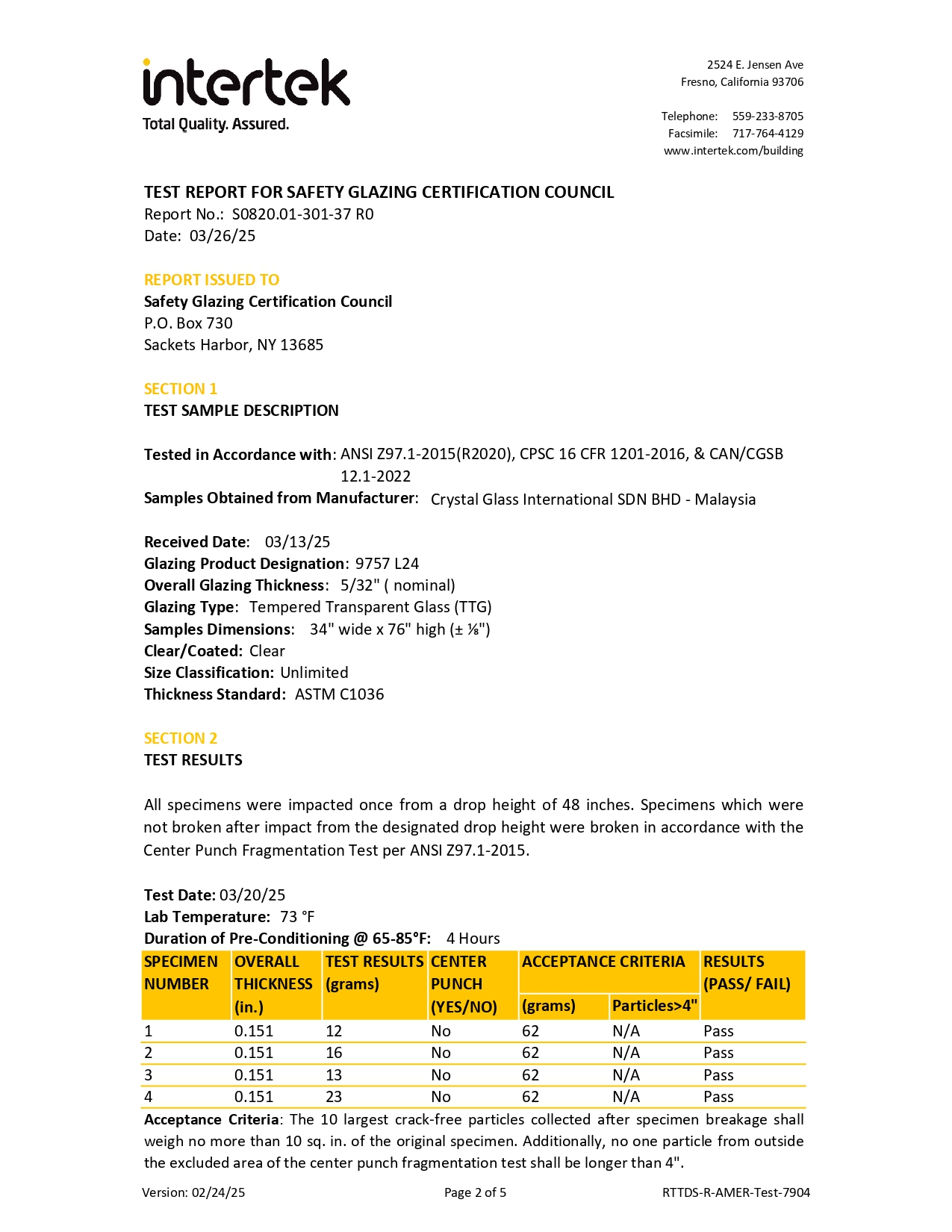
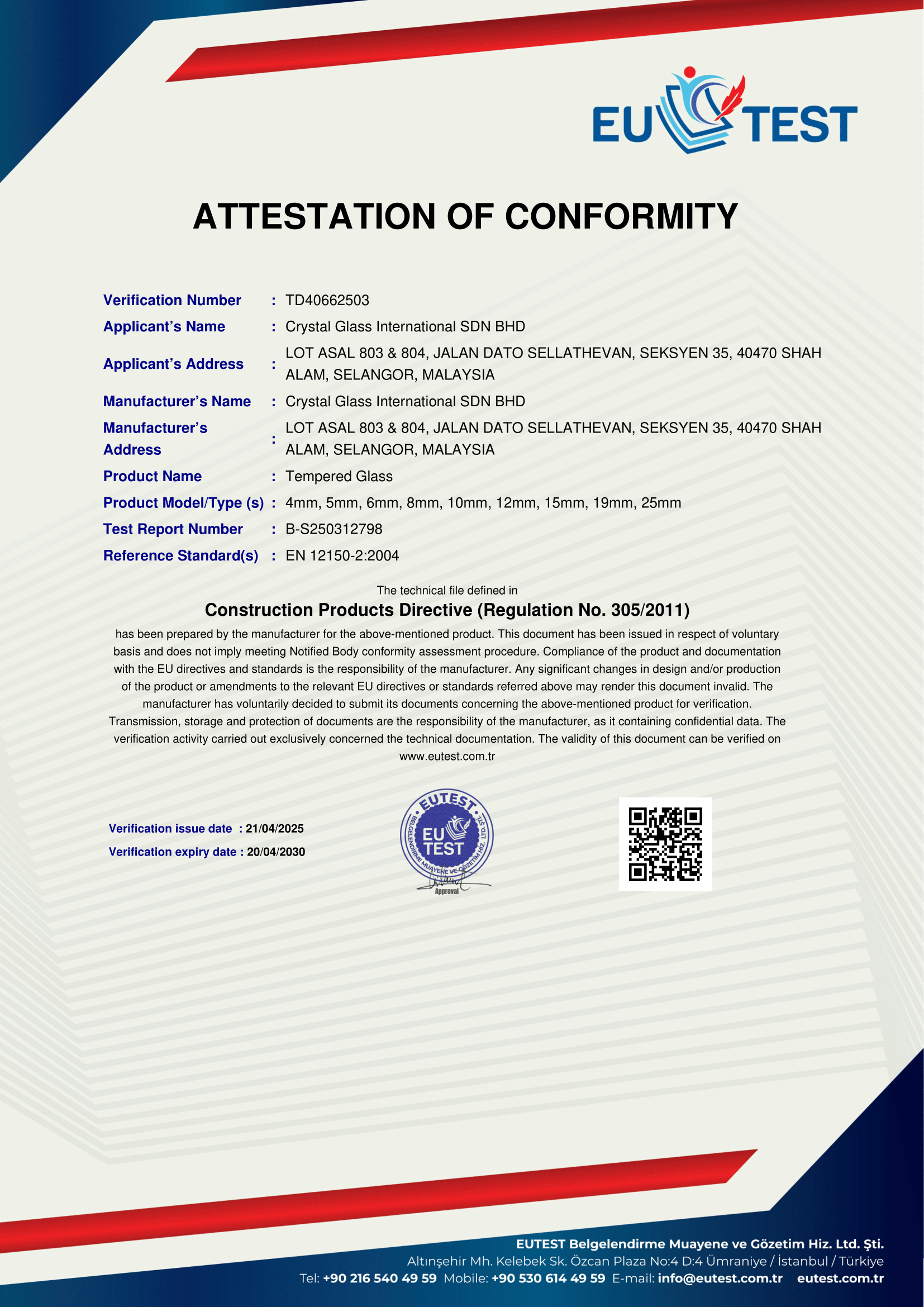
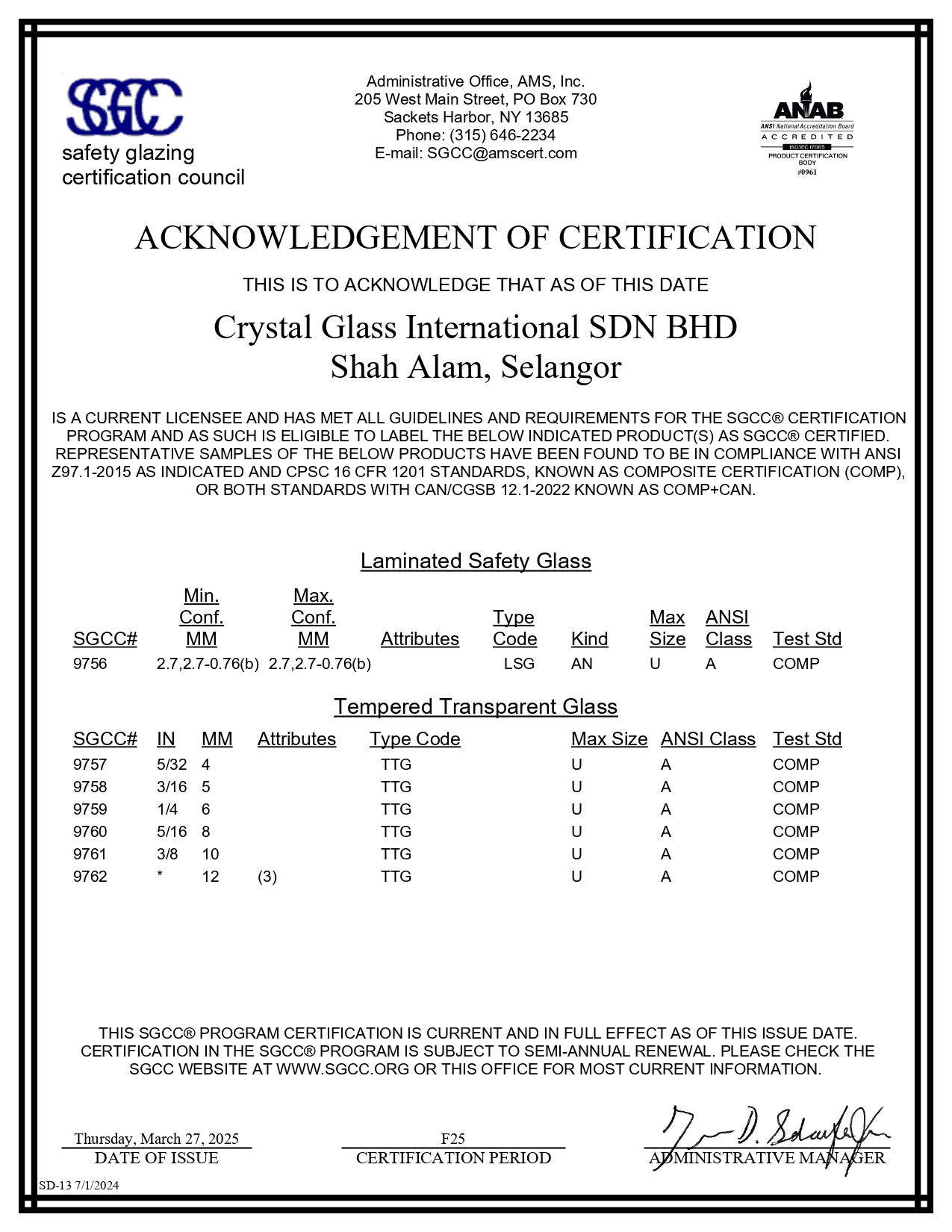
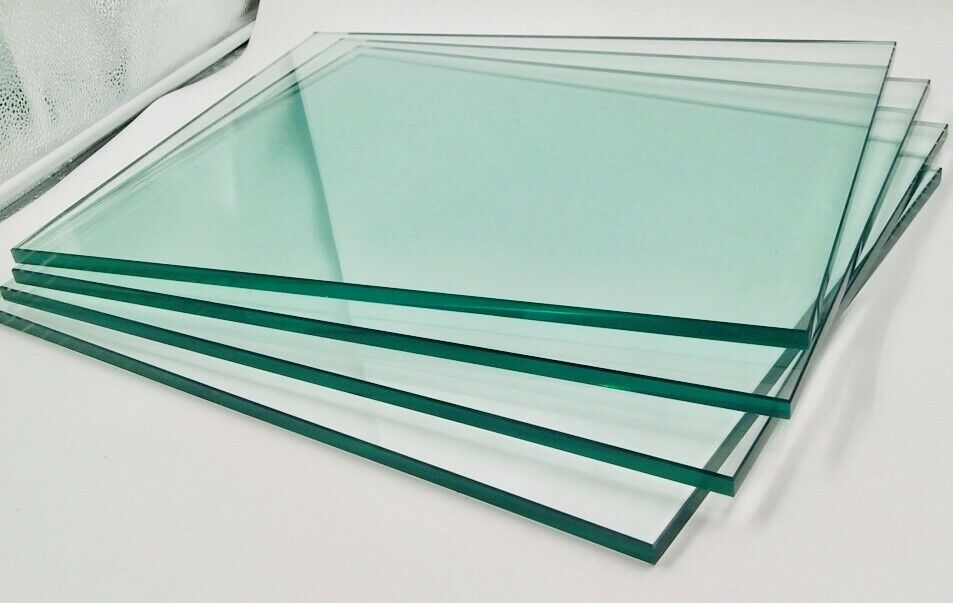
Tempered Glass
5x Stronger Than Regular Float Glass
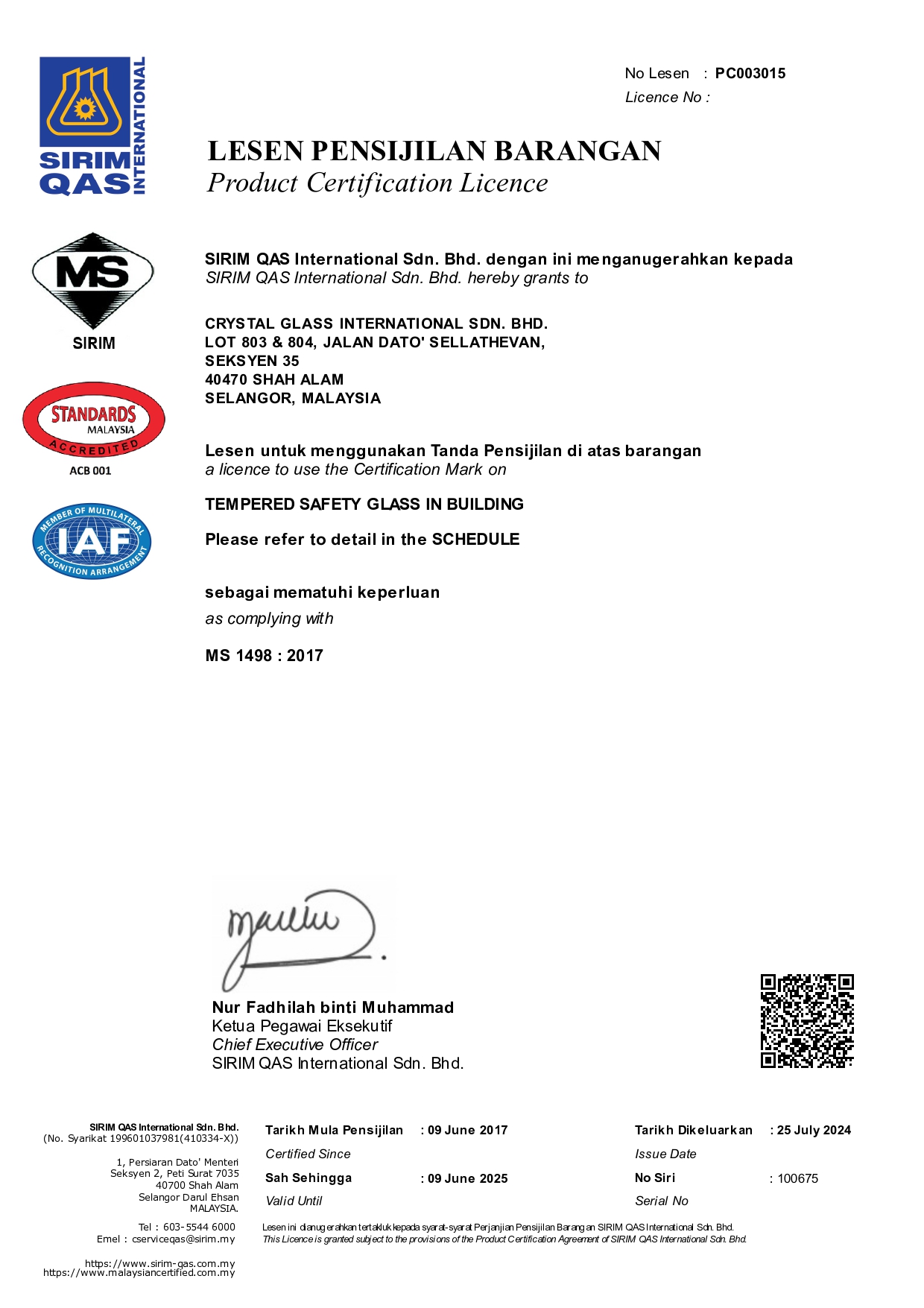
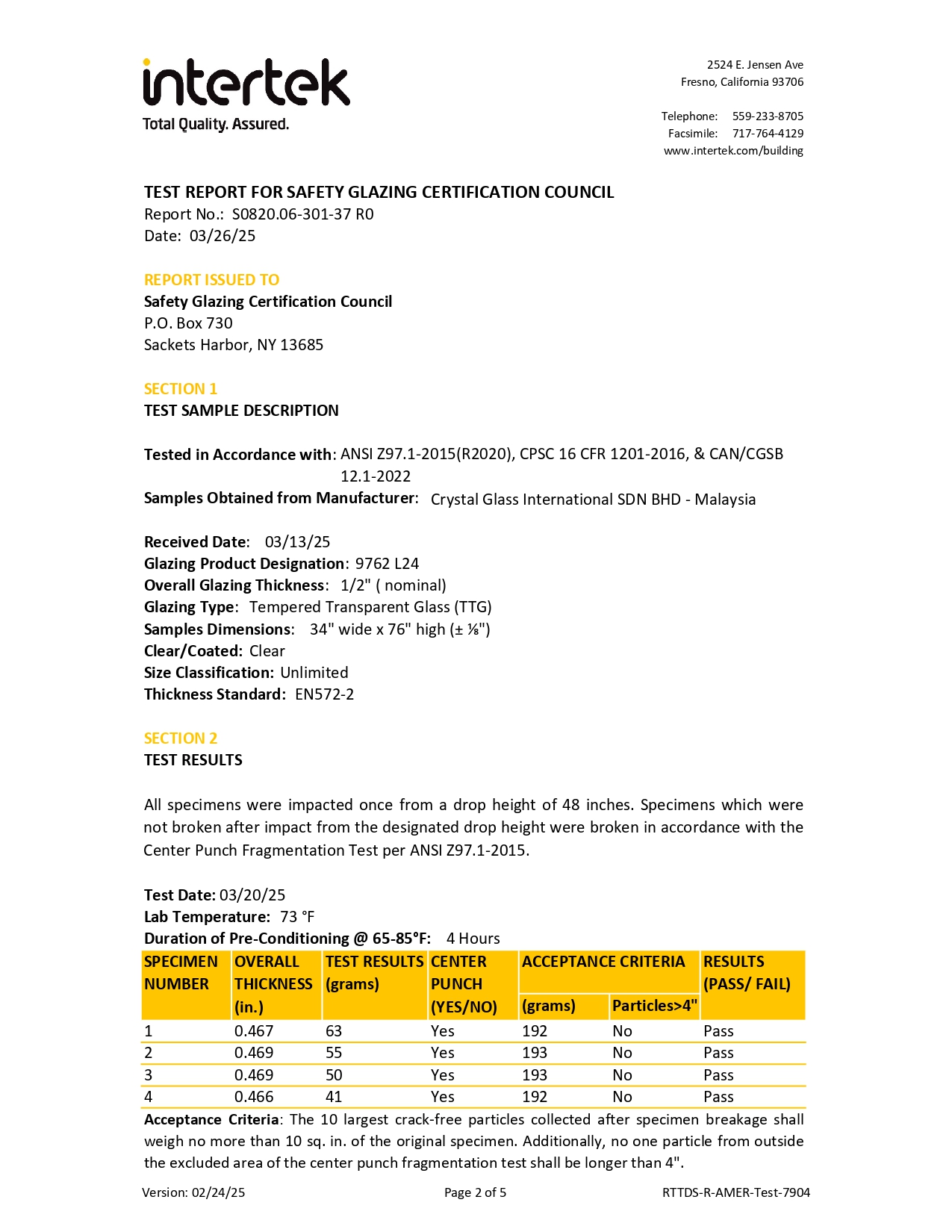
Tempered glass is a type of safety glass that has been heat-treated to improve its strength and durability. It undergoes a special thermal treatment, where the glass is heated to a high temperature (620°C to 700°C) and then rapidly cooled using jets of cold air. This process increases the glass’s strength by putting the outer surfaces into compression and the inner surfaces into tension, making it 4-5 times stronger than regular glass. The result is a material that is not only stronger but also safer: if broken, tempered glass shatters into small, cubical fragments, reducing the risk of serious injury. This makes it the ideal choice for applications where both strength and safety are essential.
Spontaneous Breakage
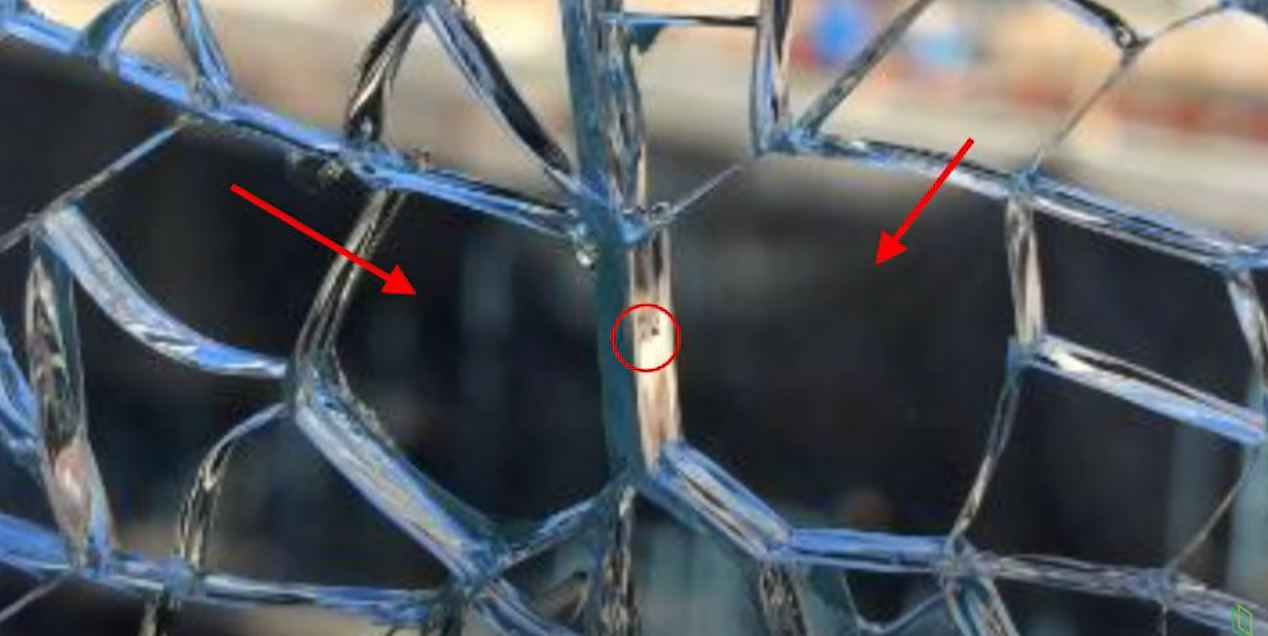
In rare instances, tempered glass may break without an apparent external cause due to internal inclusions, particularly Nickel Sulphide (NiS) stones. These inclusions can form during the glass production process due to nickel contamination. When the glass is exposed to temperature fluctuations after installation, the NiS inclusions, which measure between 0.003 to 0.015 inches in diameter, may expand, creating internal stress that can lead to spontaneous breakage. Although this phenomenon is extremely rare, the risk can be minimised by subjecting the tempered glass to a Heat Soak Test, which helps detect and eliminate glass with potentially hazardous inclusions.
- Superior Strength – Up to 5 times stronger than regular glass, offering increased durability and reliability.
- Safety Assurance Breaks into small, blunt pieces, minimising the risk of injury compared to untreated glass.
- Thermal Resistance – Capable of withstanding thermal shock and high-temperature variations, making it ideal for a range of environments.
- Aesthetic Consistency – Uniform appearance, providing smooth surfaces without distortion or waviness.
The heat soak test is designed to minimise or eliminate the risk of spontaneous breakage in tempered glass caused by internal stone inclusions, particularly Nickel Sulphide (NiS). This process involves exposing tempered glass to elevated temperatures for a specific duration.
The heat soak process consists of three phases: heating, holding, and cooling. The primary objective of this test is to identify and break glass that may be at risk of spontaneous breakage, ensuring that any glass with NiS inclusions will fail during heat soak cycle, rather than after installation. The key principle is to achieve a “break now, not later” result.
CSG Heat Soak Tempered Glass is backed by a 10-year warranty. Terms and conditions apply.
- Thickness: 4mm – 19mm, catering to different structural needs.
- Size Range: 300mm x 300mm – 2440mm x 6000mm
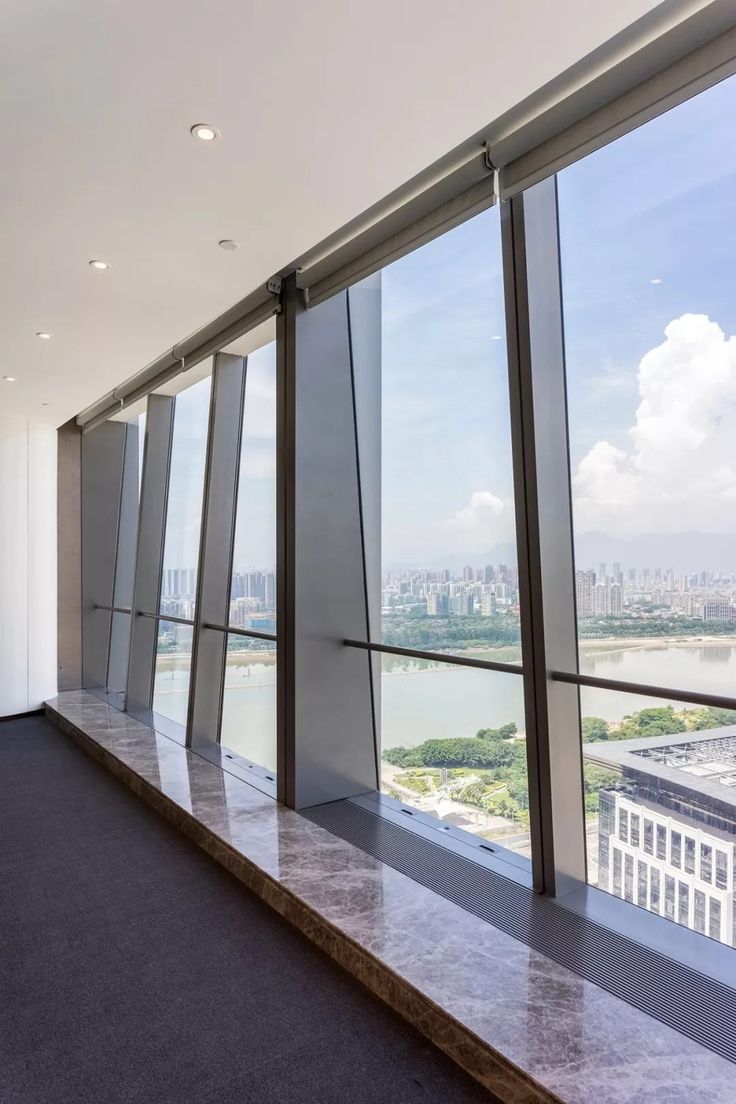
- High-strength safety glass for residential and commercial buildings
- Glass doors, partitions, and windows
- Facades, storefronts, and curtain wall systems
- Interior design features like tables, balustrades, and shower enclosures
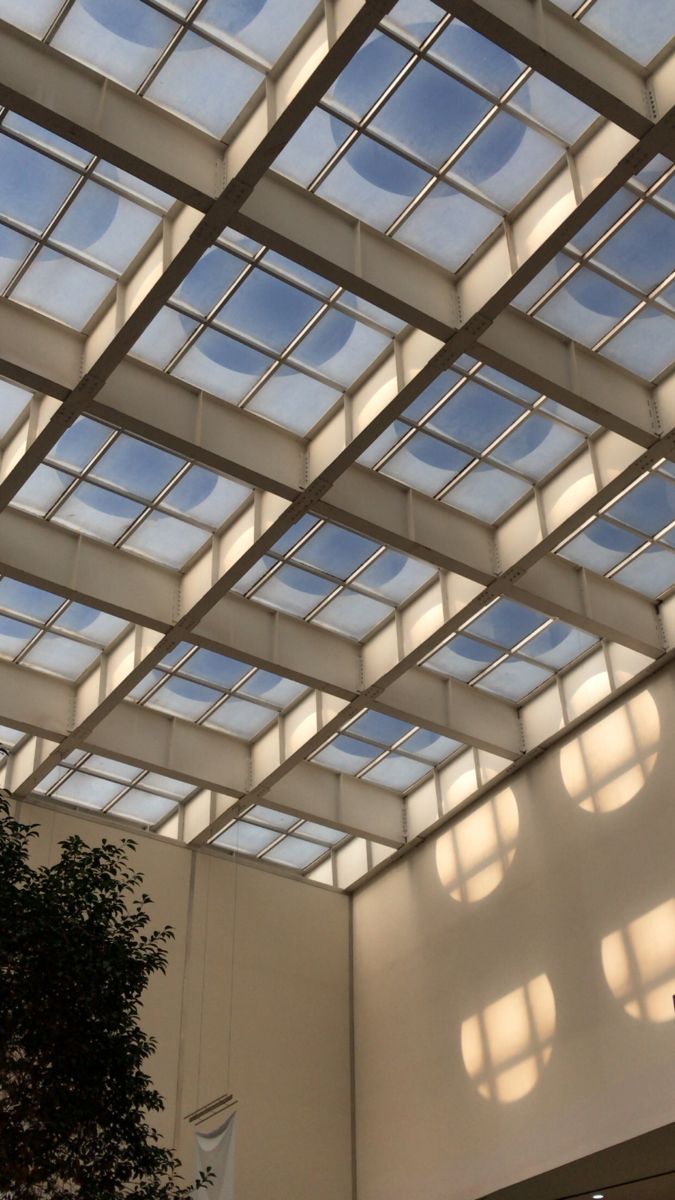
- Glass roofing, skylights, and atrium designs
- Automotive and transportation applications
Heat Strengthened Glass
When Regular Glass Isn’t Enough
Heat strengthened glass is a semi-toughened safety glass that has been
heat-treated to boost strength and thermal resistance. Heated to around 620°C and slowly cooled, it develops lower surface compression than tempered glass. This makes it about 2x stronger than annealed glass, while still offering better breakage safety. Ideal for projects needing added durability without full tempering.

Spontaneous Breakage
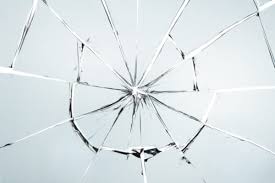
While spontaneous breakage is less common in heat strengthened glass than in fully tempered glass, Nickel Sulphide (NiS inclusions can still pose a risk. These microscopic particles may expand over time due to a temperature exposure, potentially causing breakage.
Heat strengthened glass is not typically subjected to a Heat Soak Test, as its lower surface stress makes it less prone to NiS-related failure compared to tempered glass.
- Enhanced Strength – Around 2x stronger than standard float glass, suitable for demanding conditions.
- Thermal Stability – Withstands temperature fluctuations and thermal stress better than regular glass.
- Breakage Behaviour – Cracks instead of shattering, reducing the risk of glass fallout while maintaining structural integrity.
- Design Flexibility – Non-distorted appearance, perfect for laminated units or applications where full tempering isn’t required.
- Thickness: 4mm – 19mm, catering to different structural needs.
- Standard Size: 300mm x 300mm – 2440mm x 6000mm
- Laminated safety glass for facades and skylights
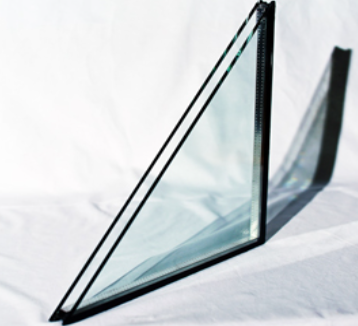
- IGUS (Insulated Glass Units) in curtain walls
- Spandrel panels and structural glazing systems
- Areas where post-breakage strength retention is crucial
- Applications requiring less distortion than fully tempered glass
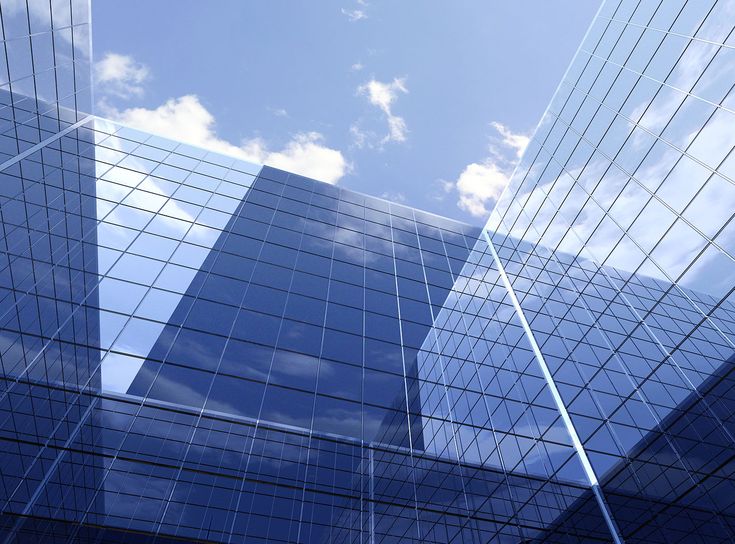
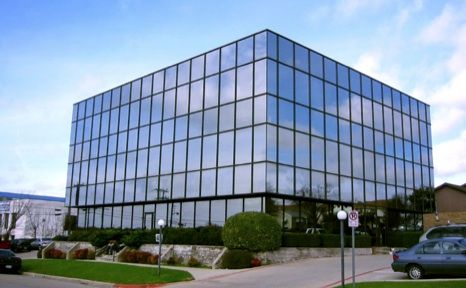
Tempered Glass for Architectural Projects in Malaysia
Crystal Safety Glass manufactures architectural glass in Shah Alam, Selangor. When enquiring about tempered or heat-strengthened glass, share the intended application, panel dimensions, thickness and project specification so our team can discuss the required processing.