Low-Emissivity Glass (Low-E)
Enhancing Comfort, Saving Energy
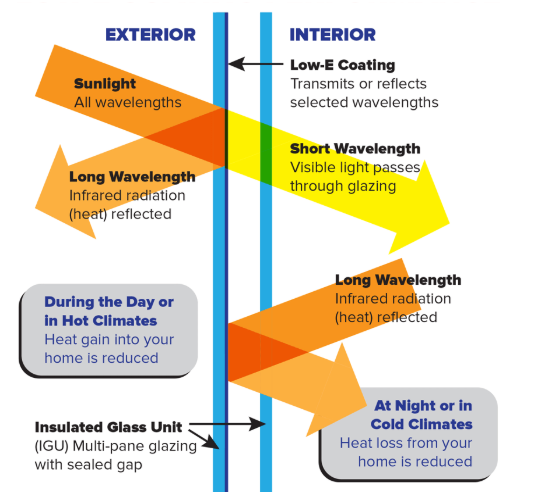
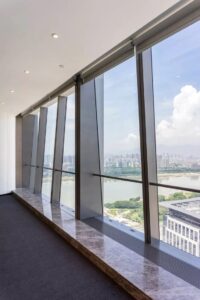
Low-Emissivity (Low-E) glass is engineered to reduce the transfer of infrared radiation, significantly improving thermal insulation in both warm and cold climates. This innovative glazing solution helps maintain a comfortable indoor environment by minimising heat loss during the winter and reducing solar heat gain in the summer. Available in single-silver and double-silver coatings, Low-E glass offers varying levels of insulation and solar control, enhancing energy efficiency and occupant comfort. Its ability to regulate temperature fluctuations makes it an ideal choice for energy-efficient buildings, providing both thermal performance and long-term cost savings.
- Enhanced Thermal Insulation – Reduces heat transfer, keeping interiors warmer in winter and cooler in summer.
- Optimised Energy Efficiency – Minimises heating and cooling costs by improving building insulation.
- Superior Solar Control – Limits infrared and ultraviolet (UV) radiation, preventing excessive heat gain.
- High Light Transmission – Maintains natural daylight levels while enhancing energy performance.
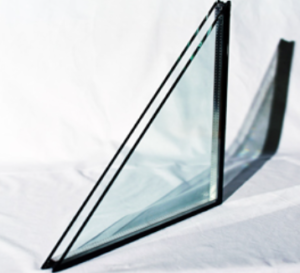
- Versatile Application – Compatible with Insulated Glass Units (IGUs), windows, facades, and skylights.
- Multiple Coating Options – Available in single, double, and triple-silver coatings for varying performance needs.
- Thickness: 5mm 10mm
- Standard Size: 2438mm x 3658mm
- Coating Options: Single-Silver, Double-Silver, and Triple-Silver Low-E coatings for varying levels of insulation and solar control.
- Energy-efficient residential and commercial buildings
- Insulated Glass Units (IGUs)
- High-performance windows, doors, and curtain walls
- Skylights and facade systems
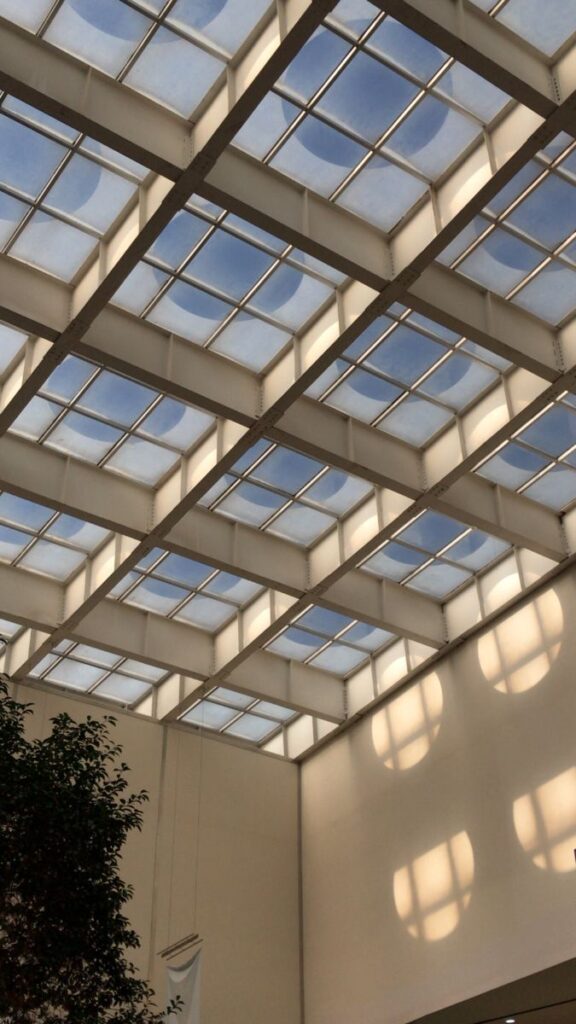
Comparison of Hard-Coat and Soft-Coat Low-E Glass
Low-E glass is available in two primary coating types, each offering distinct thermal and solar control properties.
| Feature | Hard-Coat Low-E | Soft-Coat Low-E |
|---|---|---|
| Manufacturing Process | Coating applied during the float glass production process (pyrolytic) | Coating applied using vacuum deposition techniques (sputtering) |
| Durability | Highly durable, resistant to mechanical wear | More delicate, requires additional protection (e.g., IGUs) |
| Thermal Insulation | Moderate thermal insulation | Superior thermal insulation, better solar control |
| Emissivity | Higher emissivity compared to Soft-Coat | Lower emissivity, offering better thermal performance |
| Applications | Suitable for single-pane and laminated glass | Commonly used in Insulated Glass Units (IGUs) |
| Visible Light Transmission (VLT) | Moderate VLT | Higher VLT, allowing more natural light |
| Cost | More cost-effective | Typically higher cost due to advanced manufacturing |
| Solar Control | Moderate solar control | Superior solar control, reducing heat gain |

Performance Metrics for Low-Emissivity Glass
| Performance Metric | Description | Typical Value |
|---|---|---|
| U-value (Thermal Insulation Efficiency) | Measures the rate of heat transfer through the glass; lower values indicate better insulation. | 1.0-1.8 W/m²K |
| Solar Heat Gain Coefficient (SHGC) | Represents the fraction of solar radiation admitted through the glass; lower values reduce heat gain. | 0.25 -0.40 |
| Visible Light Transmittance (VLT) | Indicates the percentage of natural light passing through the glass, affecting indoor brightness. | 40% - 70% (varies by coating type) |
| Emissivity (E-value) | Defines the glass surfaces ability to emit radiant heat; lower emissivity enhances energy efficiency. | Soft-Coat: 0.03 -0.10 Hard-Coat: 0.15 -0.20 |